A material made for movement
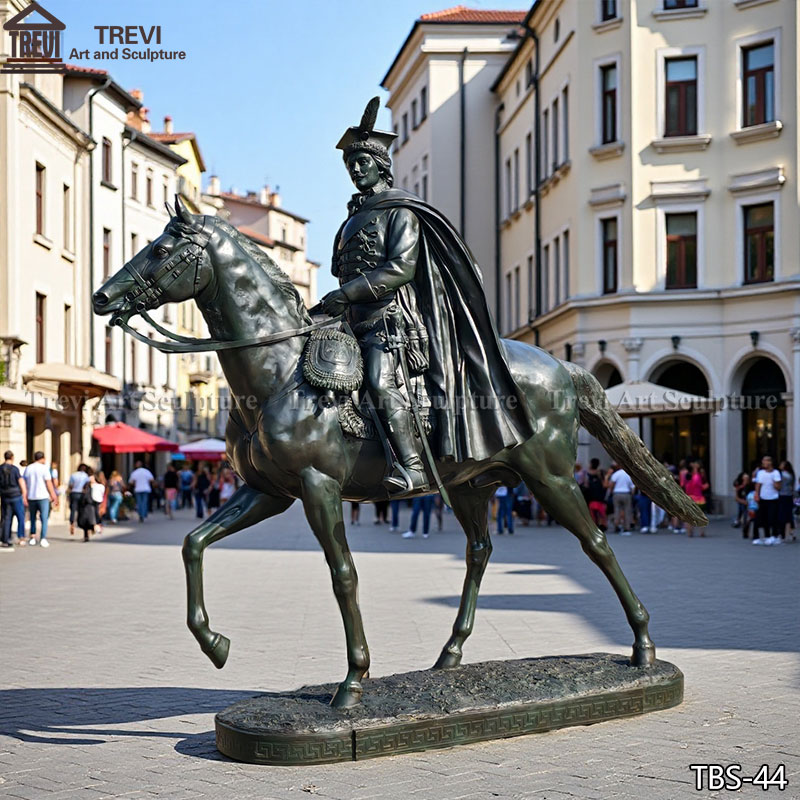
Bronze combines strength with extraordinary descriptive ability. Molten metal can carry the imprint of a sculptor’s finger, the fine edge of an ear and the sweep of a mane, then support forms that would be fragile in stone. That combination makes it unusually well suited to the horse—an animal defined by both mass and motion.
The material also allows parts to be cast separately and joined. Large equestrian works can preserve open space between legs and body, giving sculptors more freedom to compose energetic silhouettes.
Surface that changes with light
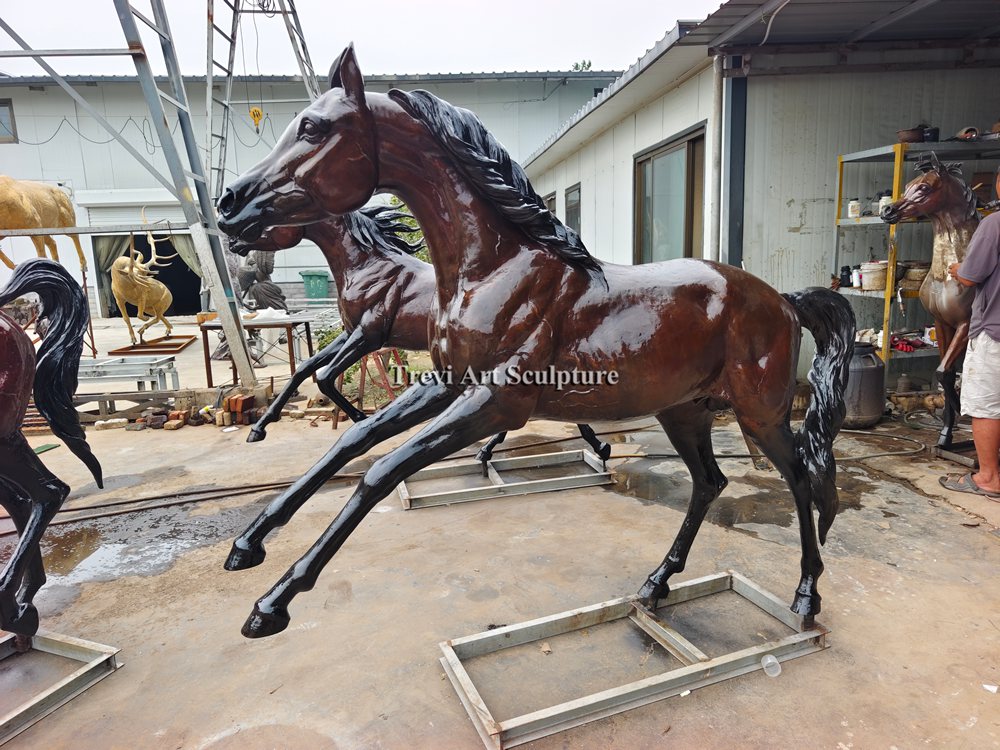
Bronze is not one color. Chasing creates crisp or textured surfaces, while patina adds transparent layers of brown, black, red or green. Raised areas may be gently polished so light travels across muscles and tack, making the work change as the viewer moves.
Outdoors, the surface continues to respond to climate. A maintained waxed patina can remain relatively stable; an intentionally living finish may deepen and develop new green notes over time.
Old process, contemporary language
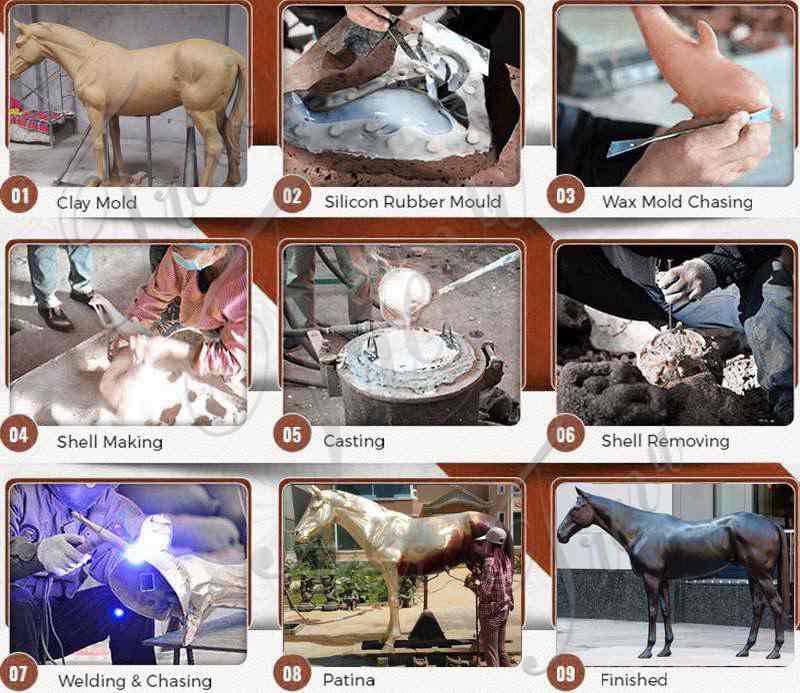
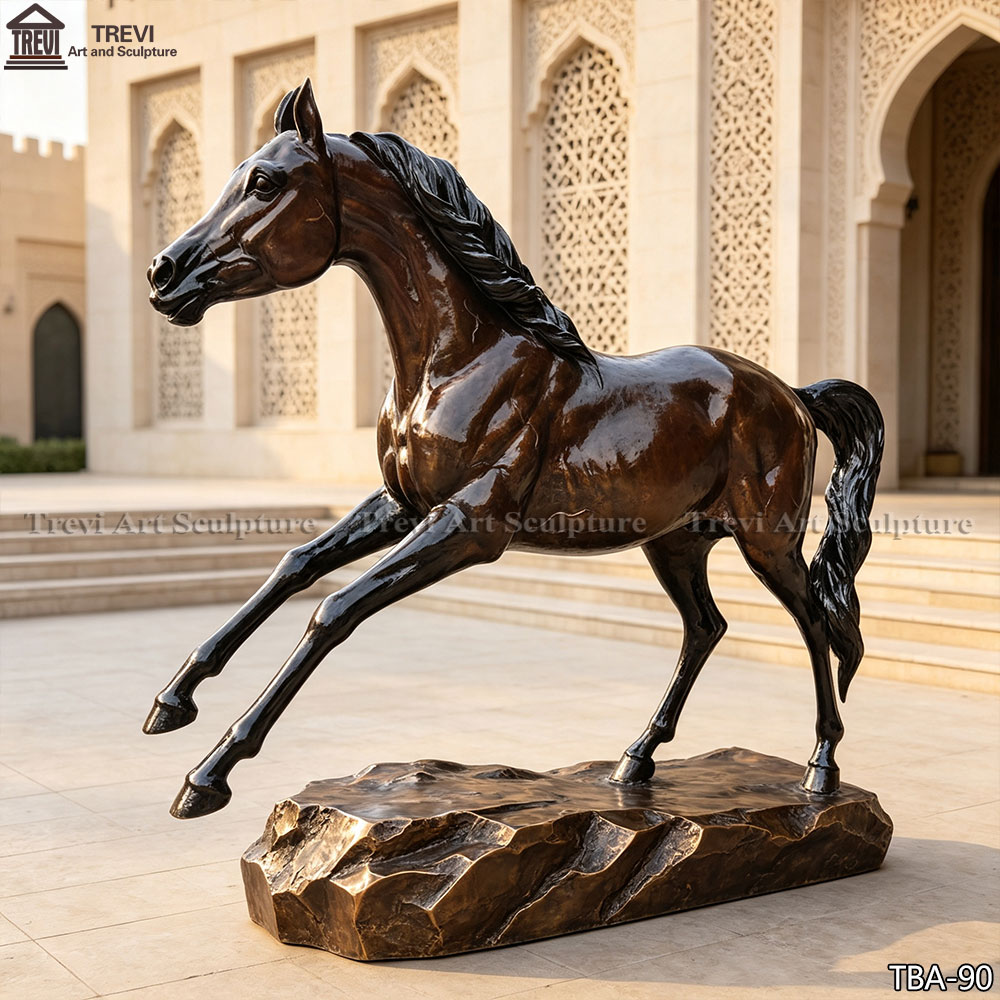
Today’s sculptors use bronze for classical realism, abstraction and everything between. Digital scanning may help scale a clay model, but the decisive stages—wax refinement, chasing and patina—still depend on experienced hands.
That continuity gives a modern bronze a rare double identity: it can belong to present architecture while carrying a method linked to centuries of sculpture. The result feels permanent without needing to feel old-fashioned.
At a glance
- Look for surface intention, not uniform perfection.
- View bronze from several angles and lighting conditions.
- Ask how the patina is meant to age.