Design the arrival as a sequence
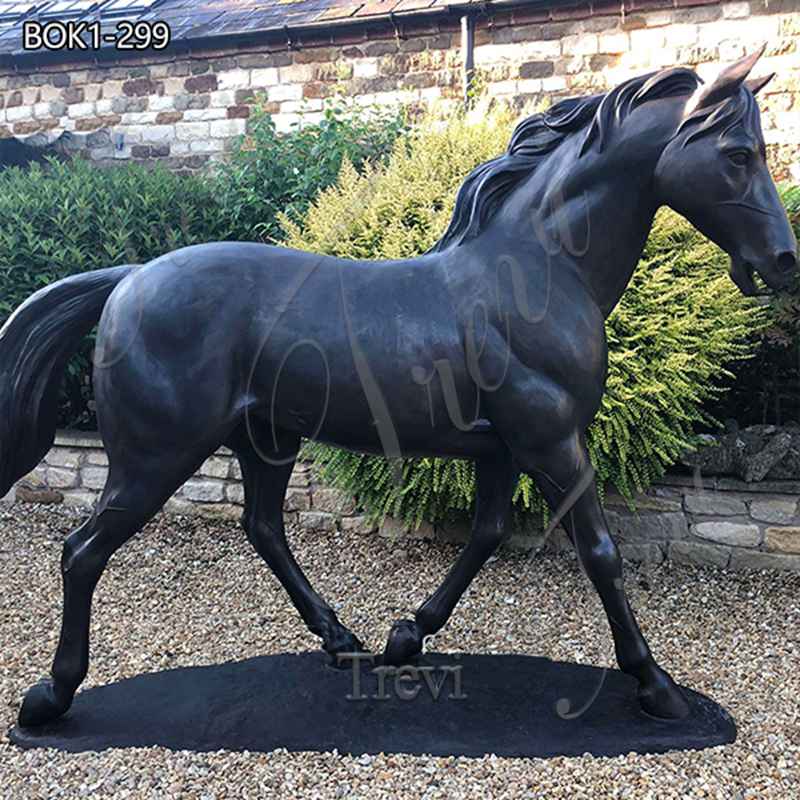
An entrance is experienced in motion. Visitors see the first silhouette from the road, approach it at an angle, and finally pass close enough to notice the patina. A successful placement works at all three distances. Use a broad standing pose for long views and reserve intricate tack or facial detail for areas where people slow down.
At a drive, position sculpture just beyond the gate rather than directly beside moving leaves or vehicle swing paths. Indoors, place it where the front door frames the work without forcing guests to walk around a projecting tail or base.
Symmetry, pairing and direction
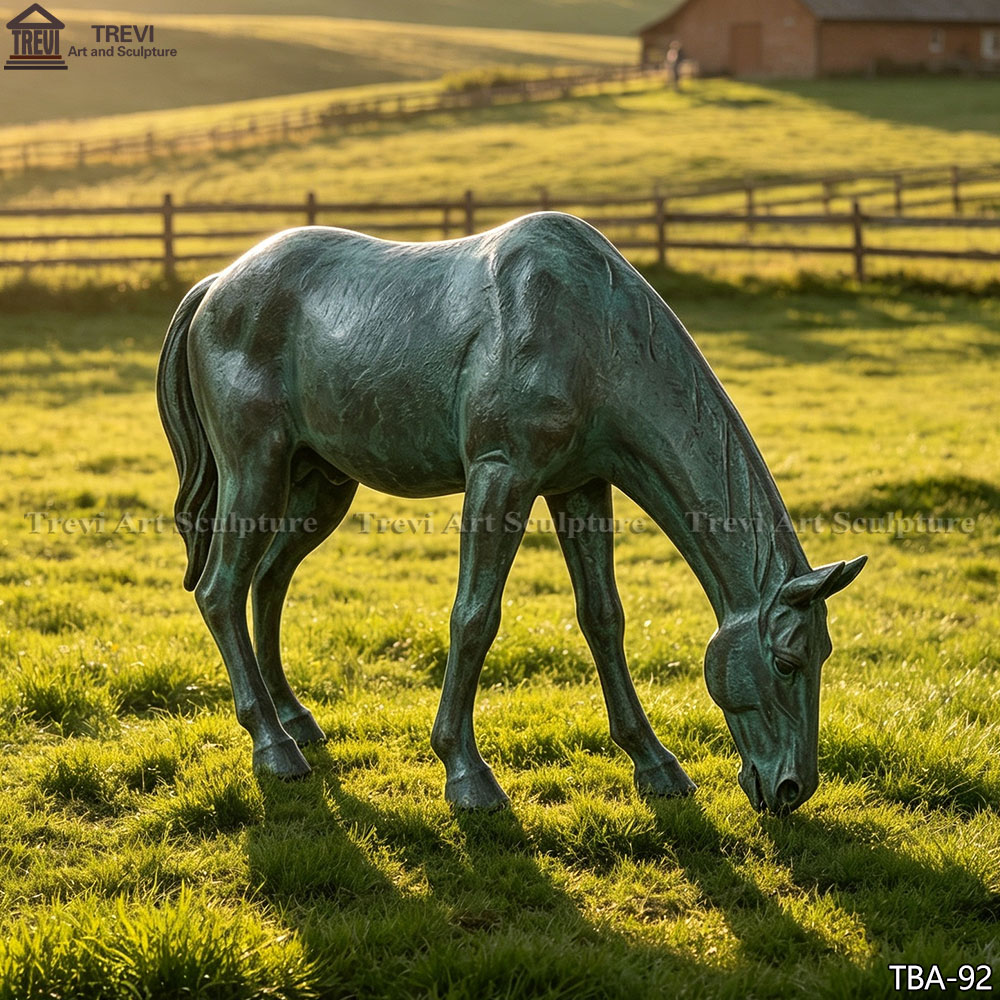
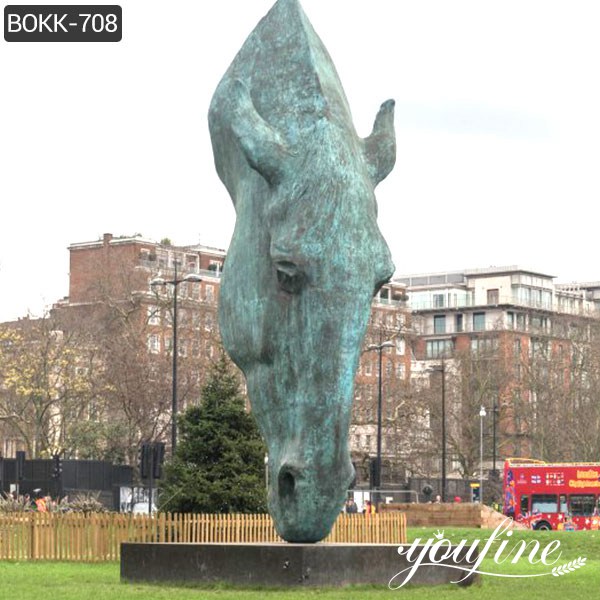
Matching horses can lend a formal estate character, but identical mirrored poses sometimes feel static. A more natural pair turns each head slightly toward the arrival path. One can stand alert while the other lowers its neck, creating balance without repetition.
A single rearing horse makes a stronger emblematic statement. Give it an architectural anchor—a stone wall, clipped hedge or circular drive—and turn the movement into the property rather than away from it.
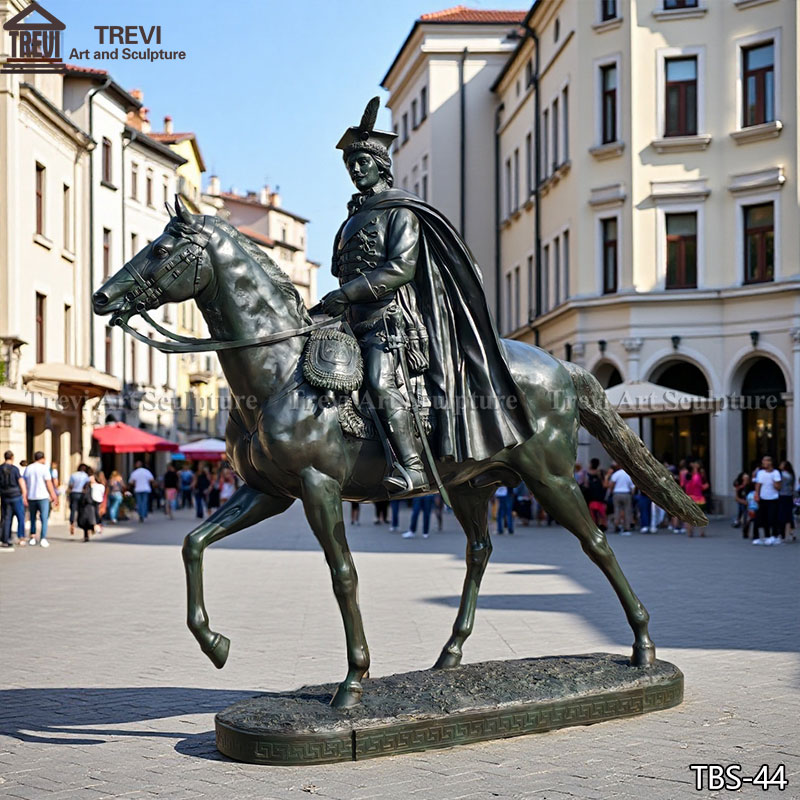
Ground the sculpture
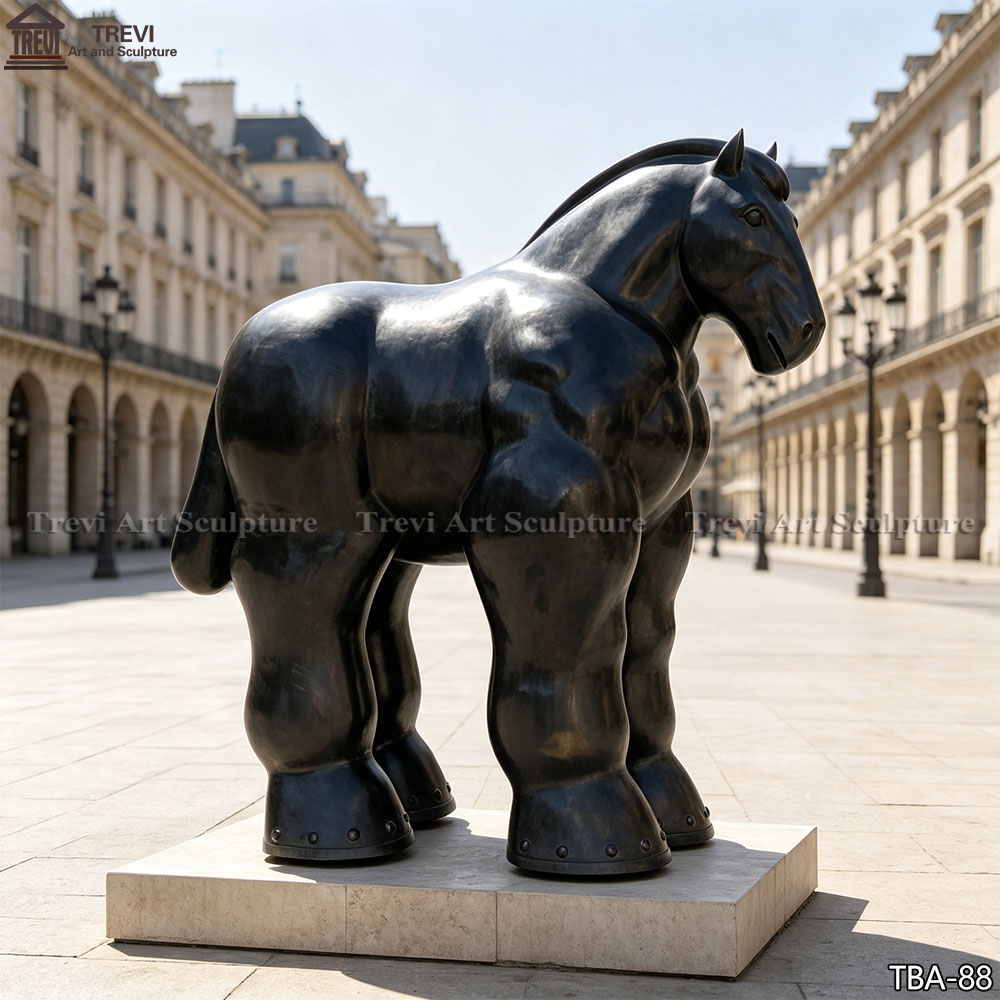
Plinth material should connect the art to the building. Limestone suits pale classical facades, dark granite supports contemporary architecture, and a low bronze ground plate can disappear within meadow planting. Keep the base wide enough for stability but visually secondary.
Lighting belongs off-axis. Two low fixtures from different angles reveal the legs and head while avoiding a harsh theatrical shadow. Always coordinate anchors, drainage and power before paving or planting is complete.
At a glance
- Mock up life-size scale with cardboard or timber.
- Check views from both vehicle and pedestrian height.
- Leave maintenance access around the base.