Choose a landscape role
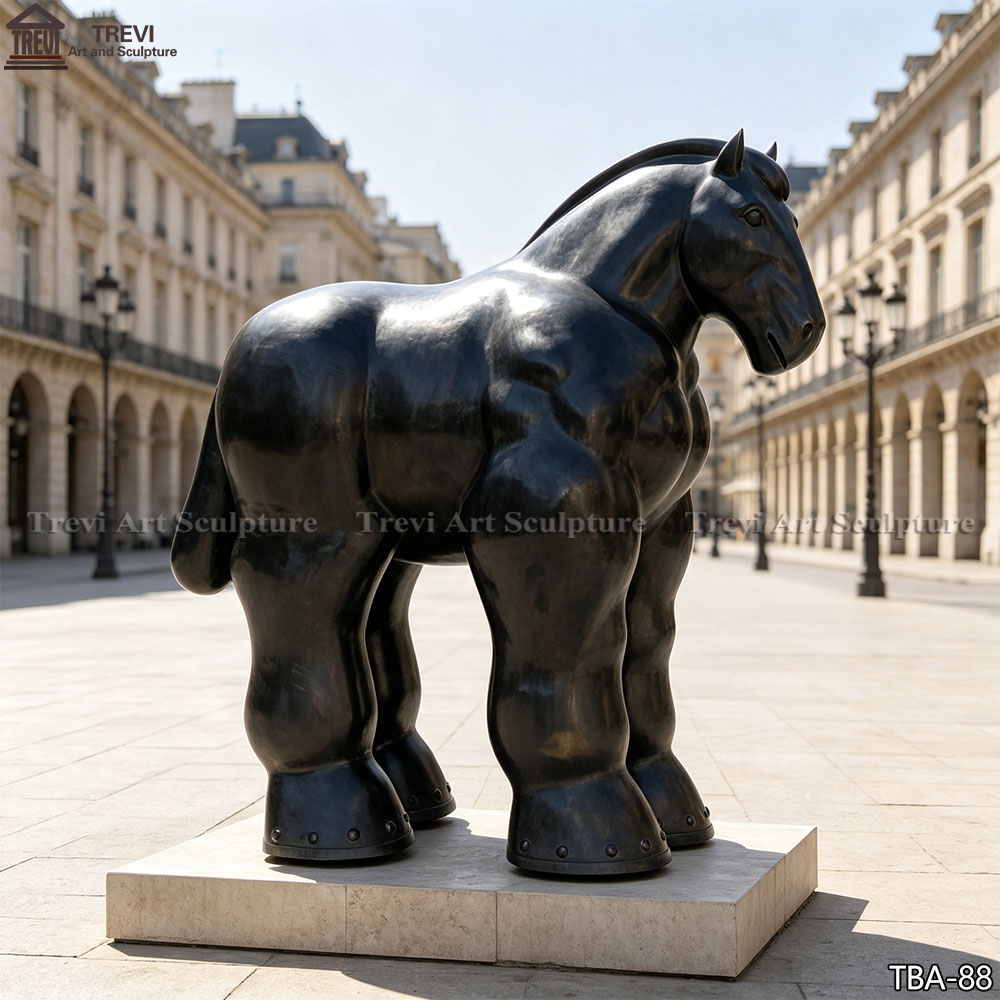
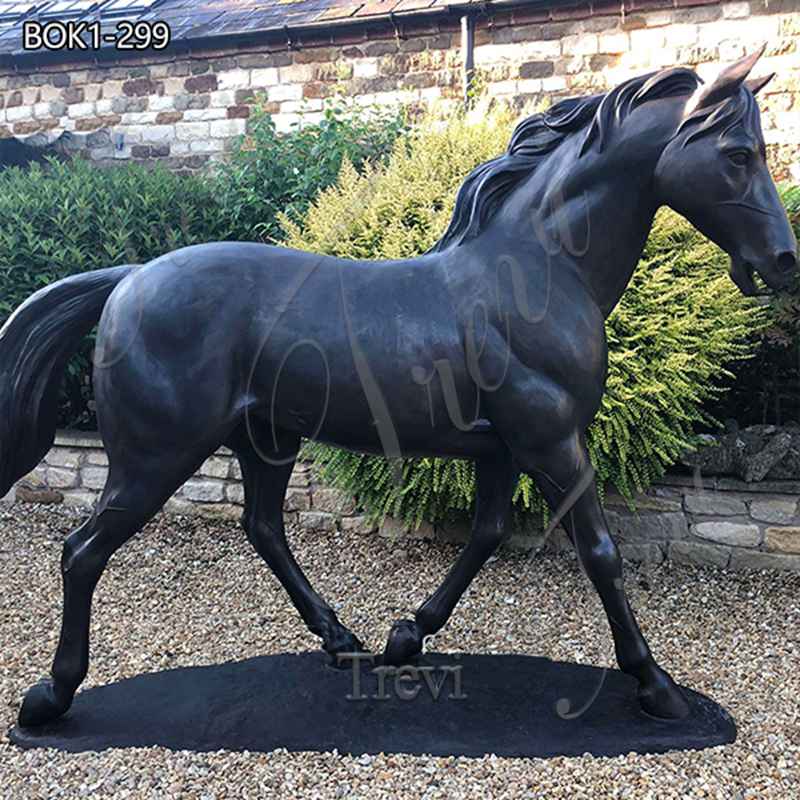
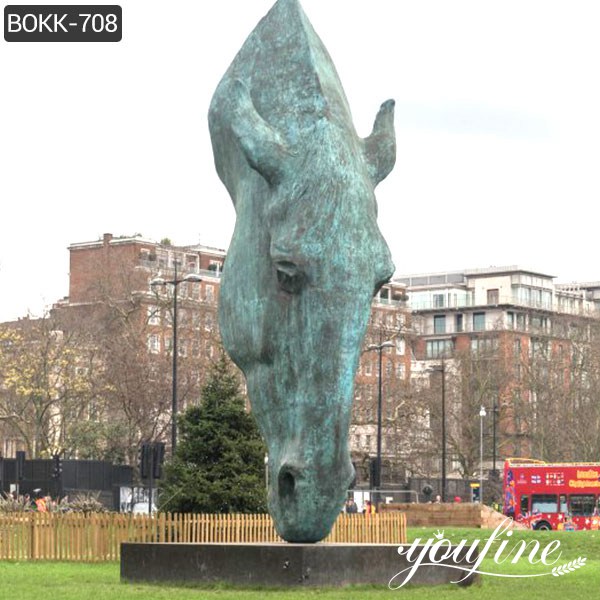
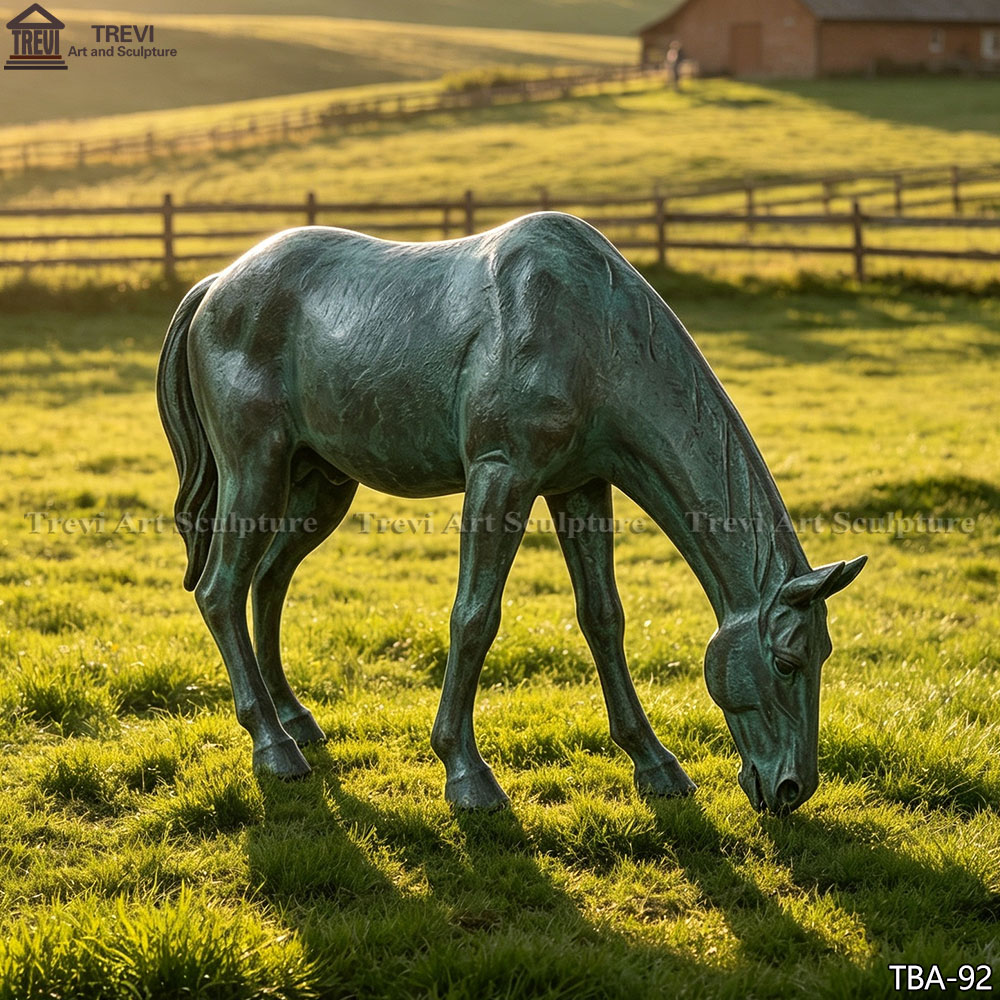
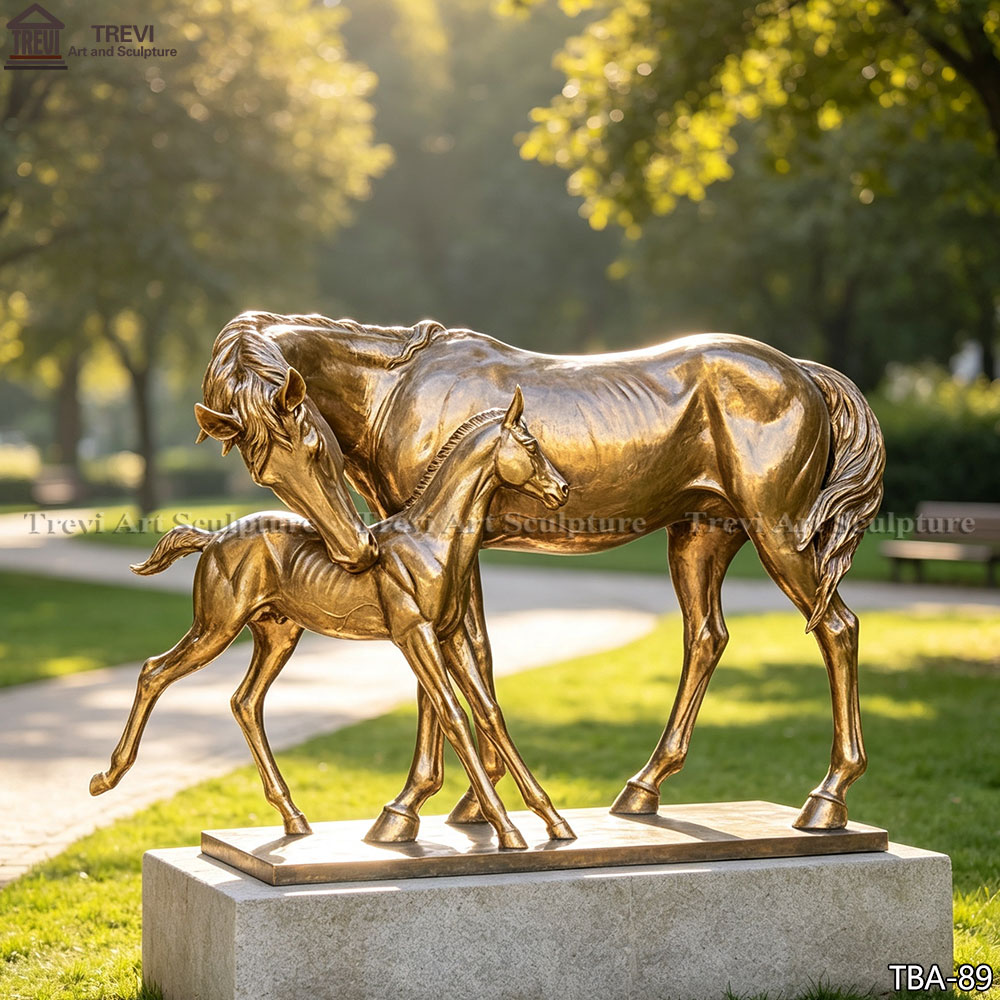
A life-size horse can behave like a destination, a companion to architecture or an apparently discovered presence in the landscape. Decide which role matters before selecting a pose. A galloping group suits a long lawn; a grazing pair settles naturally near meadow planting; a poised stallion can terminate a formal axis.
The most convincing placements allow visual space in the direction the horse faces. A running sculpture pressed against a wall feels arrested, while the same figure aimed across an open view appears to move through it.
Use planting as a frame
Evergreen structure keeps bronze legible through winter. Layer lower grasses and perennials around the base, but keep thorny or dense shrubs clear of delicate projected details. Copper-green patina is luminous against deep foliage; warm brown finishes harmonize with bark, gravel and autumn color.
Consider mature plant size, not nursery size. A sapling that seems harmless today may obscure the sculpture within five years. Preserve at least one reliable viewing corridor from the house or principal path.
Plan for weather and foundations
Bronze is durable outdoors, but the installation beneath it determines long-term stability. The foundation must suit the sculpture’s weight, wind exposure, soil and frost conditions. Anchor locations should be coordinated with the foundry and a local engineer before concrete is poured.
Rainwater should move away from the plinth. Once installed, a gentle seasonal wash and periodic wax refresh will help the patina weather evenly. Changes in tone are part of bronze’s living surface, not automatically a defect.
At a glance
- Study the site in winter as well as summer.
- Keep irrigation spray from repeatedly striking one side.
- Photograph the patina after installation as a care baseline.